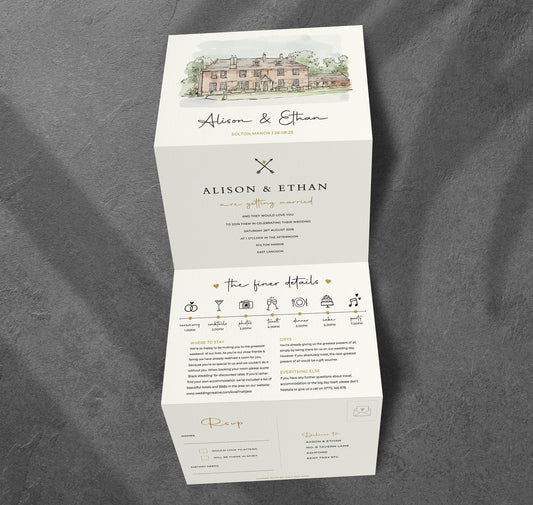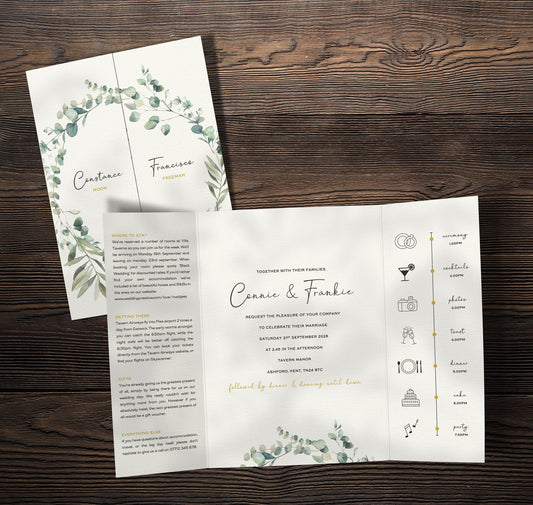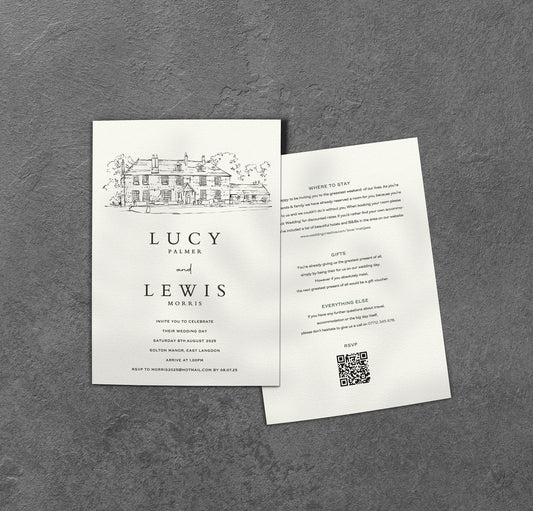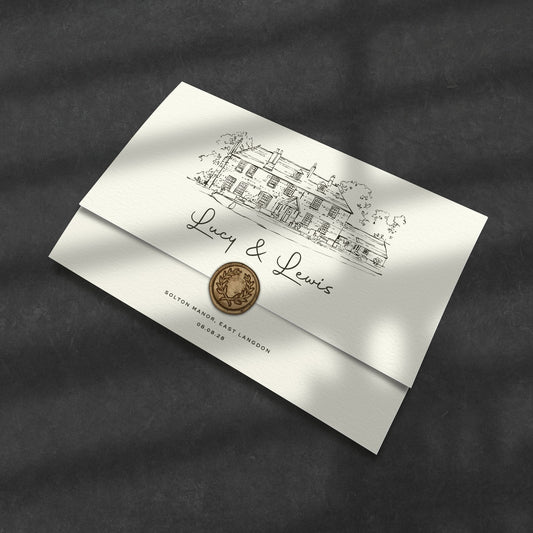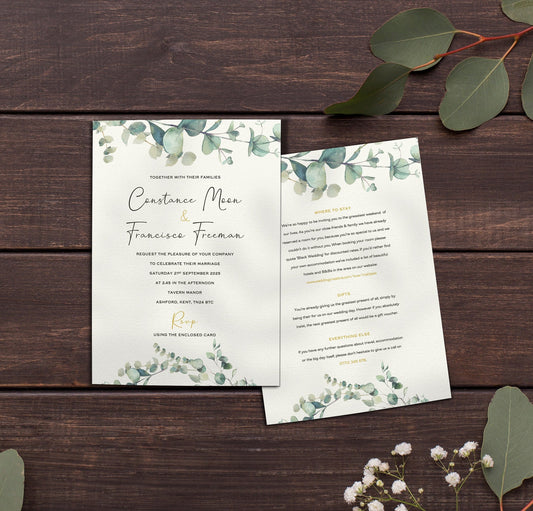
If you are planning a wedding and feeling unsure about timings, a clear wedding stationery timeline can make everything feel far more manageable. This UK focused guide walks you through when to order and send each piece of stationery, helping you stay organised without rushing or over ordering.

Your Wedding Stationery Timeline at a Glance
Most UK couples follow a similar rhythm when it comes to stationery. While every wedding is different, this timeline works well for the majority of celebrations.
- 6 to 12 months before: save the dates
- 3 to 4 months before: wedding invitations
- 3 to 4 weeks before: RSVP deadline
- 1 to 2 weeks before: on the day stationery
6 to 12 Months Before: Save the Dates
Save the dates are usually the first piece of stationery sent. They are most useful if your wedding falls during peak season, on a bank holiday weekend, or if guests need to travel.
You do not need to send save the dates to everyone. They are typically sent to close family, the wedding party and guests who will need to plan ahead.
3 to 4 Months Before: Wedding Invitations
Wedding invitations are usually sent 8 to 12 weeks before the wedding date. This gives guests enough notice while keeping details fresh in their minds.
If you have already sent save the dates, invitations can be sent slightly closer to the wedding without issue.
This is also the stage where you finalise wording, layouts and any additional details such as RSVP methods or wedding website information.
Setting Your RSVP Deadline
Most UK couples set their RSVP deadline around 3 to 4 weeks before the wedding. This allows time to confirm numbers with suppliers and plan seating arrangements.
Leaving a clear gap between the RSVP date and the wedding helps avoid last minute stress.
4 to 6 Weeks Before: Planning On the Day Stationery
Once RSVPs begin to come in, you can start planning on the day stationery. This includes items such as:
- Place cards
- Table plans
- Menus
- Order of service
You do not need to print everything at once, but having designs ready early makes the final weeks much calmer.
1 to 2 Weeks Before: Final Printing
On the day stationery is usually printed one to two weeks before the wedding, once guest numbers are confirmed.
Leaving this too late can feel stressful, especially if changes are needed, so it is best to allow a small buffer where possible.
How Digital RSVPs Affect the Timeline
Digital RSVPs often speed things up. Responses come in more quickly and are easier to manage, which can bring forward decisions around seating plans and menus.
This flexibility is one of the reasons many modern UK couples now choose digital response options.
Adjusting the Timeline for Different Weddings
Some weddings need slightly different timings.
- Destination weddings often require earlier invitations
- Small local weddings may not need save the dates
- Registry office weddings often suit simpler timelines
The key is to plan around your guests rather than following strict rules.
A Calm Approach to Wedding Stationery
Your wedding stationery timeline should support your planning, not add pressure. Clear steps, realistic timings and early decisions make the whole process far more enjoyable.
If you know what is coming next and roughly when, everything else tends to fall into place.