Wedding Invitation Wording Examples UK

If you are looking for wedding invitation wording examples in the UK, you are likely at the stage where details start to feel real. Getting the wording right matters, but it does not need to be complicated. This guide shares clear, practical wording examples for different types of UK weddings, helping you choose language that feels natural and appropriate for your day.

Traditional Wedding Invitation Wording

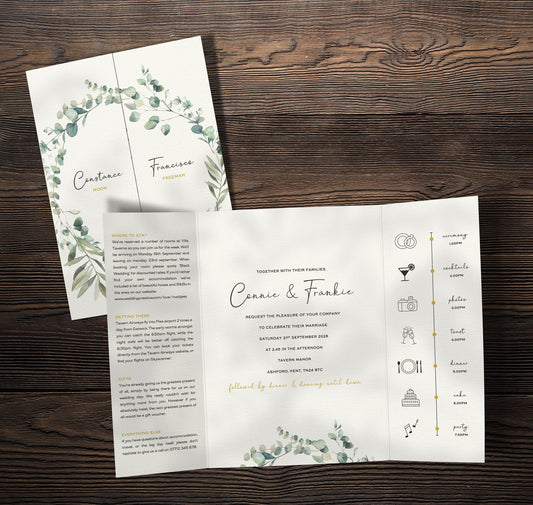
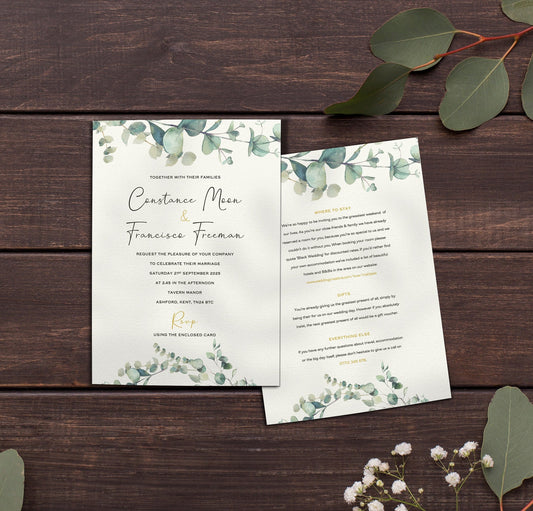
Traditional wording is still popular for church weddings and more formal venues. It follows a structured format and formal tone.

Example:

Together with their families,
Emily Rose Carter
and
James William Hughes
request the pleasure of your company
at their marriage
on Saturday 12th July 2026
at two o’clock in the afternoon
St Mary’s Church, Oxford

This style suits formal settings and traditional ceremonies.

Modern Wedding Invitation Wording

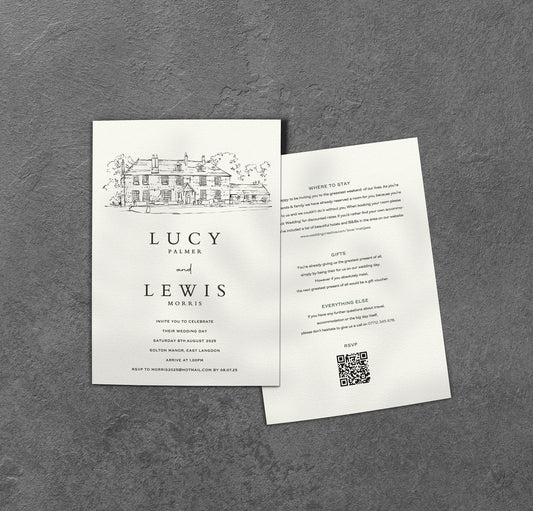
Modern wording is more relaxed while still feeling considered. It is one of the most popular choices for UK weddings.

Example:

Emily Carter
and
James Hughes
invite you to celebrate their wedding
on Saturday 12th July 2026
at 2pm
The Orangery, Oxfordshire

This wording feels warm, clear and contemporary.

For more contemporary wedding stationery wording ideas see our dedicated blog.

Relaxed and Informal Wedding Invitation Wording

For laid back weddings, relaxed wording can feel more personal and welcoming.

Example:

Please join us
Emily and James
as we get married
Saturday 12th July 2026
2pm
The Orangery, Oxfordshire

This works well for informal venues and smaller celebrations.

Registry Office Wedding Invitation Wording

Registry office weddings often suit simpler, more direct wording.

Example:

Emily Carter
and
James Hughes
are getting married
Saturday 12th July 2026
2pm
Oxford Register Office

You can add “Reception to follow” if applicable.

Wedding Invitation Wording When Parents Are Hosting

If parents are hosting, their names traditionally appear at the top of the invitation.

Example:

Mr and Mrs Andrew Carter
request the pleasure of your company
at the marriage of their daughter
Emily Rose
to
James William Hughes
on Saturday 12th July 2026
at 2pm

How to Include Reception Details

If your reception is at the same venue, a simple line such as “Reception to follow” is enough.

If it is elsewhere, include the venue name and location either on the invitation or a separate details card.

RSVP and Additional Information

Many UK couples now include RSVP details digitally. Common options include:

  • “Kindly RSVP by 1st June 2026”
  • A wedding website or QR code
  • Email replies for smaller weddings

This keeps the invitation clean while giving guests clear instructions.

Choosing the Right Tone for Your Wedding

Your wording should reflect the tone of your day rather than tradition alone. A formal venue suits more structured wording, while relaxed venues allow for simpler language.

The most important thing is clarity. Guests should understand who, where and when at a glance.

A Simple Rule for Wedding Invitation Wording

If the wording sounds natural when read aloud, it is usually right. Clear, calm language almost always feels more welcoming than overly formal or decorative phrasing.

Close up of two gold wedding rings resting on soft white fabric with delicate greenery, styled as a romantic wedding detail.
Back to blog

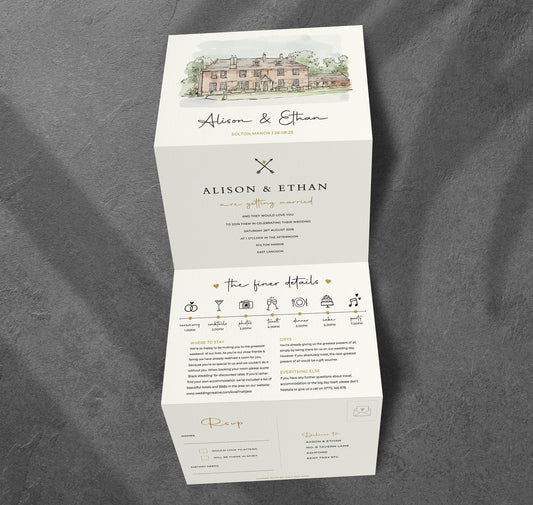
Once you’ve chosen your wording, selecting an invitation design that complements your tone helps create a cohesive first impression for your guests.

  • What should wedding invitation wording include?

    Wedding invitation wording should clearly include the names of the couple, the date and time of the wedding, the ceremony venue, and reception details if they are taking place at the same or a different location. Many couples also include RSVP instructions and dress code information to avoid confusion for guests.

  • How do you word wedding invitations politely?

    Polite wedding invitation wording focuses on warmth and clarity. Traditional wording often uses formal language and third person phrasing, while modern invitations tend to be more relaxed and conversational. The key is to choose wording that reflects your personality while remaining respectful and easy to understand.

  • Should wedding invitations be formal or informal?

    Wedding invitations can be formal or informal depending on the style of your celebration. Formal wording suits traditional ceremonies and classic venues, while informal wording works well for relaxed weddings, countryside celebrations or modern venues. Consistency between your wording and overall wedding style is more important than formality itself.

  • How do you word wedding invitations for evening guests?

    Evening wedding invitation wording should clearly state that guests are invited to join the celebration later in the day. It is important to include the time, venue and any relevant details, while gently acknowledging that the ceremony has already taken place earlier. Clear wording helps avoid confusion and ensures guests feel welcome.

  • Do day and evening wedding invitations need different wording?

    Yes, day and evening wedding invitations should use different wording. Day invitations include ceremony details and full timings, while evening invitations focus on the celebration that follows. Using tailored wording for each group ensures guests understand exactly which part of the day they are invited to attend.

  • How do you word wedding invitations without mentioning gifts?

    If you prefer not to mention gifts on your wedding invitations, it is perfectly acceptable to leave this information out entirely. Many couples choose to share gift preferences on a separate wedding website or simply rely on guests to decide for themselves. Wedding invitation wording should focus on the celebration rather than expectations.

  • Can wedding invitation wording be personalised?

    Wedding invitation wording can absolutely be personalised. Many couples choose to adjust phrasing to reflect their relationship, cultural traditions or family involvement. Personalised wording helps your invitations feel more meaningful and sets the tone for your wedding day from the very first impression.

  • When should wedding invitations be sent?

    In the UK, wedding invitations are typically sent 8 to 12 weeks before the wedding date. If you have already sent save the dates, sending invitations closer to the 8 week mark is usually sufficient. Clear wording ensures guests can respond confidently within your chosen timeframe.

Designed Wedding Invitations, Made Personal

At TavernCreative, we design wedding invitations that balance beautiful design with thoughtful wording. Many couples choose to personalise their invitations to reflect their style and the tone of their day.

Written by TavernCreative – UK Wedding Stationery Designers